PARK LOCATION
Explore the Park

Hiking and Trails
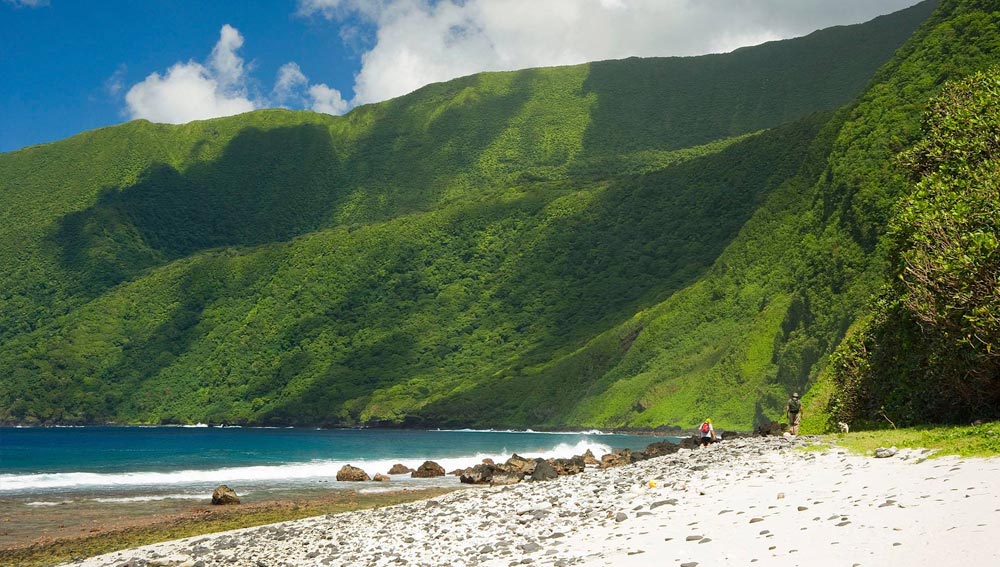
Hike in the deep green of a tropical rainforest or take peaceful beach walks on white sands at the base of soaring cliffs. Enjoy stunning coast views and steep panoramic vistas. Whether you need solitude, enjoy birding and wildlife sightings, or are interested in Samoan history and culture, there are 13 hikes on three islands, ranging from easy to challenging. Some hikes may also lead you through busy villages.

Immerse Yourself in Culture
In addition to park programs, local villages still thrive inside the park. One simple rule for culturally appropriate behavior is to always ask villagers for permission before taking photographs, using the beach, or engaging in other activities, however unobtrusive your actions may seem. Also, with the Homestay Program, residents of villages associated with the national park offer accommodations and the opportunity to learn local customs.

Park Wildlife
The most prominent land mammal at this park is arguably the most important animal in the rainforest: the fruit bat, also called the flying fox. These beautiful animals eat fruit and nectar, spreading seeds and pollinating the rainforest trees. Also look for aptly-named enormous coconut crabs in the trees, endemic forest birds, and seabirds. The stunning, extensive reef has over 900 species of fish, and is also famous for its giant clams.
Park Wildlife
Hover to Discover
U‘u (Coconut crab) is Samoa’s best known land crab; it is large and edible. It weighs four to seven pounds and has a leg span of about 30 inches.
A blue linckia sea star adds color to our reefs. Each arm has rows of tube feet that are used in crawling, attaching to things, and feeding. All starfish can grow back arms that they have lost.
Fuao (red-footed booby), is the smallest of all boobies at about 70 centimeters (28 in) in length and with a wingspan of up to 1 meter (3.3 ft).
Peʻa (fruit bats), are common in the tropical rainforests of the National Park of American Samoa and throughout American Samoa. They are very large with up to 1 meter (3.3 ft) wing spans.
Every reef dweller, like this butterfly fish, adds to the health and strength of this American Samoa ecosystem.
Mumua (spinner dolphins), which sleep during the day, inhabit the nearshore waters year-round.