Established August 1, 1961
Hawaiʻi Volcanoes National Park was originally established along with Haleakalā National Park as “Hawai‘i National Park” in 1916, the year the National Park Service was created. In 1961, the two parks became independent. Here within the more than 330,000 vast acres of designated parklands you can find two of the world’s most active volcanoes—Mauna Loa and Kīlauea—as well as tiny nananana makakiʻi (happyface spiders), carnivorous caterpillars, exquisite ʻapapane (an endemic honeycreeper), towering hapuʻu fern forests, and the nesting beaches of critically endangered honuʻea (hawksbill sea turtles). Many of the park’s species are listed as rare, protected or endangered. Kīlauea’s summit area is accessible by car. The Kīlauea Visitor Center just inside the park entrance is open every day, offering interpretive programs, museum exhibits, a park film, reference materials, and guided walks. A Hawaiʻi Pacific Parks Association park store in the visitor center showcases books, photography, maps, apparel, and more.
Cultural sites, representing six centuries of habitation by Native Hawaiians, are also special features of the park. Some of those features are historic foot trails, petroglyph fields, once-inhabited lava tube caves, and even the preserved footsteps of people traversing the Ka‘ū Desert, caught in deadly ash fall in the late 1700s. Coastal fishing villages once dotted the hot, dry coastline. Their ruins can still be seen along the coastal trails between remote campgrounds. The summit of Kīlauea is still visited by hula hālau (schools) who come to pay tribute to Pele, the volcano deity who dwells at Halemaʻumʻau crater.
Please refer to the national park page for current conditions and alerts.
Hawaiʻi Volcanoes National Park is located on the island of Hawaiʻi. The Kīlauea Visitor Center is located on Crater Rim Drive off of Highway 11 between the 28 and 29 mile marker south of Hilo.
From Hilo: 30 miles southwest on Highway 11 (a 45 minute drive).
From Kona: 96 miles southeast on Highway 11 (2 to 2 1/2 hour drive), or 125 miles through Waimea and Hilo via highways 19 and 11 (2 1/2 to 3 hours).
Hawaiʻi Volcanoes National Park is open 24 hours a day year-round.
- Kīlauea Visitor Center and Park Store is open daily from 9:00 a.m. to 5:00 p.m.
- The Kahuku Unit section of the park is located between mile markers 70 and 71 miles south of Hilo. This section is open Wednesday through Sunday) from 9:00 am to 4:00 pm. The gate will be locked at 4:00 pm.
**Hours of operation may change due to emergency situations, without notice.
Hours for junior ranger badges:
- Kīlauea Visitor Center junior ranger support from 9:00 a.m. to 4:00 p.m.
This park is large enough to encompass all weathers—summit to sea. While Hawaiʻi’s climate is fairly consistent year-round, it’s the elevation that determines what sort of weather you should plan for. At sea level, hot and humid conditions prevail. The Kahuku Ranch area is a little cooler but can be hot when the sun comes out. The Kīlauea summit area is often in cloud, and temperatures range from the 50s to the 70s. The Mauna Loa summit, at 13,679 feet above sea level, can be a frigid, foggy, sleeting, snowing, howling cold place. There, real mountaineering gear applies.

PARK LOCATION
Explore the Park


Hiking and Trails

ʻIke hana Noʻeau
Park Wildlife

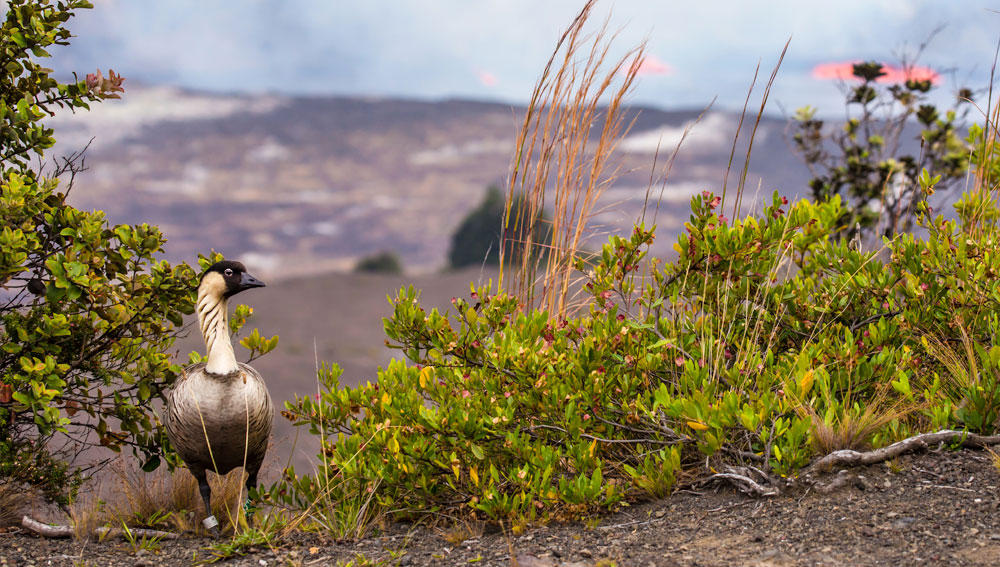
Here within the more than 330,000 vast acres of designated parklands you can find two of the world’s most active volcanoes—Mauna Loa and Kīlauea—as well as tiny nananana makakiʻi (happyface spiders), carnivorous caterpillars, exquisite ʻapapane (an endemic honeycreeper), towering hapuʻu fern forests, and the nesting beaches of critically endangered honu ʻea (Hawksbill sea turtles). Many of the park’s species are listed as rare, protected or endangered. Kīlauea volcano has been erupting nearly continuously since 1983, affording the opportunity to witness the creation of the newest land on earth.
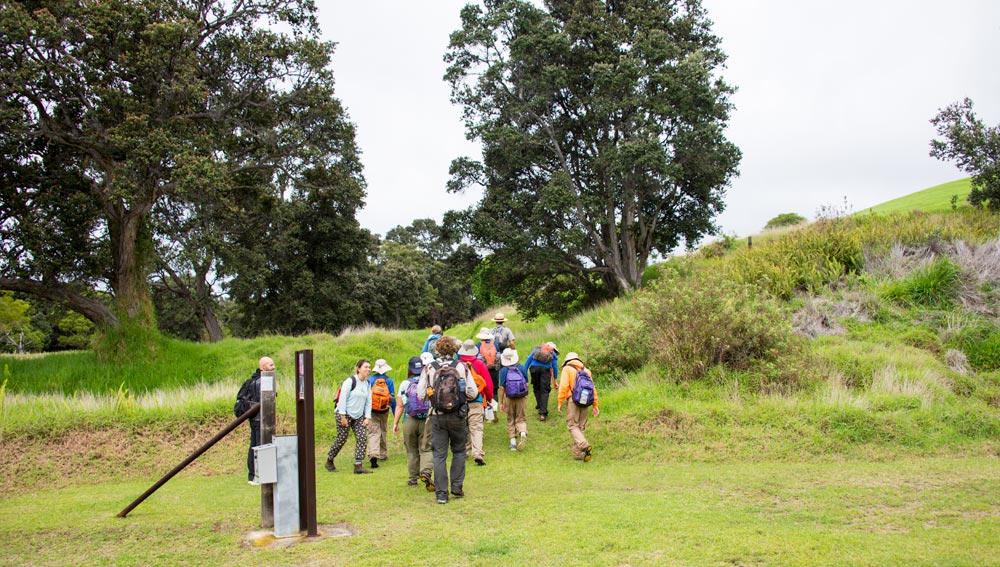
The 116,000-acre Kahuku unit of Hawaiʻi Volcanoes National Park is a former cattle ranch astride a once-active eruption site on the slope of Mauna Loa volcano. The striking landscape offers both physical reminders of the ranching history and remnants of the original forests. The park is working to restore the specific plants and animals of pre-ranching Kahuku. The park offers guided hikes, and HPPA partners with the park on ʻIke Hana Noʻeau cultural demonstrations that are free to all. Guided hikes include: People and Land of Kahuku, Palm Trail, 'Ōhi'a Lehua, Pu'u o Lokuana, Hi'iaka & Pele.
For more information about Kahuku programs call 808-929-807 Kahuku is located on Hwy 11 in Ka‘ū near mile marker 70.5Enter the Kahuku Unit of Hawai‘i Volcanoes National Park on the mauka (inland) side of Highway 11 near mile marker 70.5, and meet near the parking area.
- The Kahuku Unit section of the park is located between mile markers 70 and 71 miles south of Hilo. This section is open Thursday through Sunday from 8:00 am to 4:00 pm. The gate will be locked at 4:00 pm.
This park is large enough to encompass all weathers—summit to sea. While Hawaii’s climate is fairly consistent year-round, it’s the elevation that determines what sort of weather you should plan for. At sea level, hot and humid conditions prevail. The Kahuku Ranch area is a little cooler but can be hot when the sun comes out. The Kīlauea summit area is often in cloud, and temperatures range from the 50s to the 70s. The Mauna Loa summit, at 13,679 feet above sea level, can be a frigid, foggy, sleeting, snowing, howling cold place. There, real mountaineering gear applies.
PARK LOCATION
Explore Kahuku
Hiking and Trails

Cultural Festivals

Park Biodiversity
EXPLORE THE PARK
Hiking and Trails
ʻIke hana Noʻeau
Park Wildlife
Hiking and Trails
Cultural Events
Park Biodiversity
PARK FEATURES
Hover to Discover