PARK LOCATION
Explore the Park

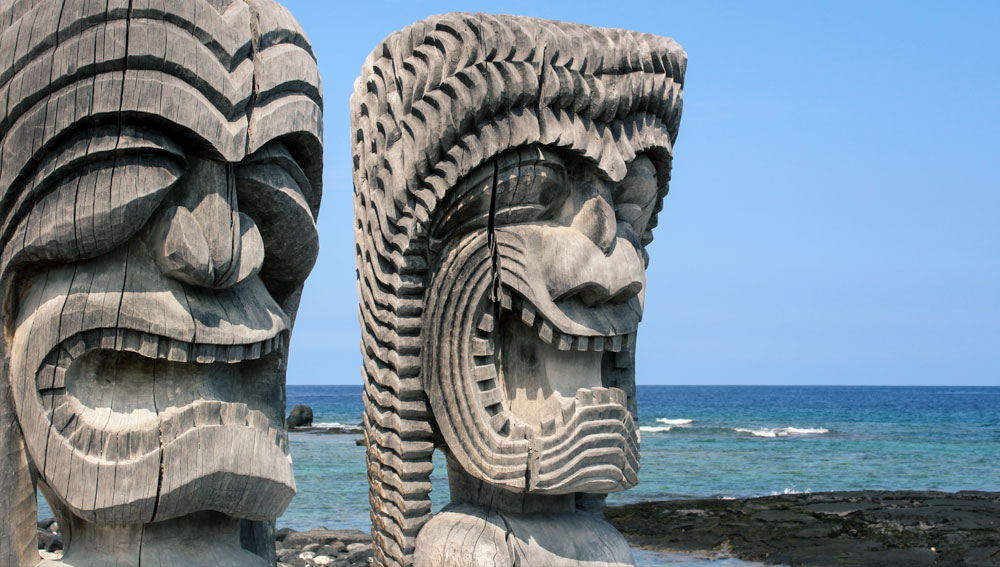
Historical Grounds
Visitors are drawn to the dramatic kiʻi (carved images), which represent deified chiefs and gods. They stand on the edge of the bay near the heiau (temple) Hale o Keawe, which once held the consecrated bones of 23 great chiefs of Hawaiʻi. This is still considered very sacred ground. The Hawaiian word “kiʻi” may be heard in other parts of Polynesia as “tiki”.

Cultural Demonstrations
HPPA-supported Cultural Demonstrators can be found practicing traditional Hawaiian arts and crafts on the Royal Grounds. Learn how to carve, weave, make fish hooks, or just bring your questions to understand this living culture. A two-day cultural festival held every at the end of June offers arts, crafts, hula, traditional foods and more.

Coastal Wildlife
Hawaiian green sea turtles feed on algae-covered rocks near shore, and haul out on the warm sands of the bay to rest and recover. Black-crowned night herons stand perfectly still on the margins of the small fishponds on the grounds, and a fortunate few may see the Hawaiian hoary bat flitting through the late evening air, or roosting high up on a palm tree.
Park Features
Hover to Discover
A short one-mile walk past the visitor center brings you to the remains of Kiʻilae Village, where the bases of homes can still be seen..
Fishponds found on the grounds are brackish, fed by underground streams. They probably functioned as “fish refrigerators,” keeping fish fresh and alive.
Park staff work to bring back native plants like ʻōhai, a beautiful low-growing endemic shrub with green-grey leaves and a startling red flower.
The original Hale o Keawe structure once contained the bones of very high chiefs, and it was believed that their mana protected this place.
Few people are aware that competitive sledding, called hōlua, was a part of Hawaiian life. There is a hōlua sled course in the park.
The wonderful plasticity of the lau hala (Pandanus leaf) made it a valuable plant, carried in the canoes of Hawaiian settlers to be woven into mats, hats, baskets and much more.