Explore the Park


Historical Grounds
The Hawaiian kingdom began here with the building of Puʻukoholā Heiau by Kamehameha I. Listen to a ranger talk about the first king of a united Hawaiʻi, then walk to Pelekane Bay, once the landing place of chiefly canoes. A sunken heiau dedicated to a shark god remains below the waters. The John Young Homestead is a short distance away.
Cultural Demonstrations
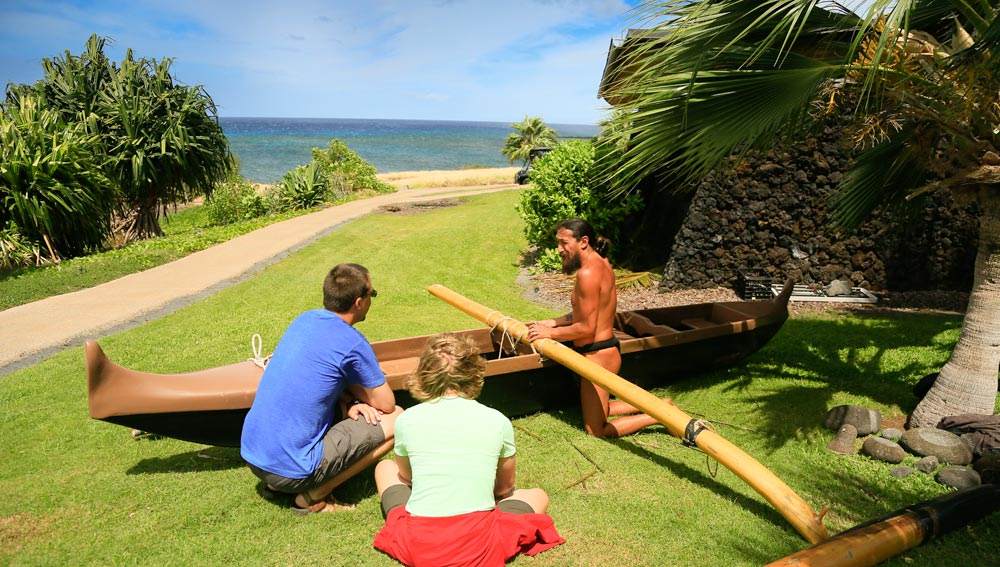
This national historic site is a hotbed of cultural activity. Daily ranger talks on Hawaiian warfare and warrior culture are fascinating, and the annual two-day cultural festival is part of a rich yearlong schedule that includes cultural demonstrations teaching featherwork, slack key guitar, lauhala (Pandanus) weaving, ʻohe kapala (bamboo stamping) and traditional Hawaiian tattoos.
Coastal Wildlife
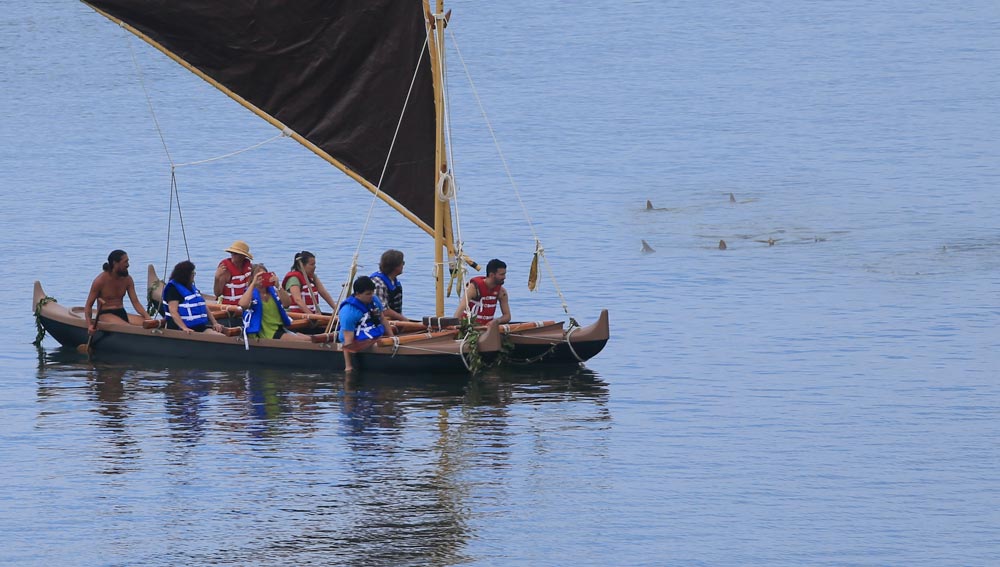
Blacktip reef sharks can sometimes be seen navigating the shallows of Pelekane Bay. The adjacent small wetland rewards the birder with a cross-section of native and non-native wetland and other birds. November to April brings the migration of humpback whales to the waters nearshore, where they are more concentrated than anywhere else on Hawaiʻi Island.
Park Features
Hover to Discover
Kamehameha carried the war god Kūkaʻilimokū into battle with him. He was a embodied as a fierce-faced, red-feather-covered entity.
Waterworn stones prescribed by prophecy for construction of the heiau are believed to have been passed person to person from Pololū Valley, over 20 miles away.
The lei o manō (a sharkʻs necklace) weapon was made of shark teeth attached to a wooden paddle, and was used in war as a fearsome cutting tool.
Iconic coconut palms stand at Pelekane Bay today as they have for centuries.
Coconut trees were very import in Polynesian life, and were carried to Hawaiʻi by the first settlers.
John Young was a westerner who became a favorite of Kamehameha and who taught Hawaiian warriors how to use a musket and cannon.
On the hot, dry grounds of the park you can find something unexpected: Hawaiian cotton. Hawaiian cotton grows naturally along the leeward coasts.