
PARK LOCATION

PARK LOCATION
EXPLORE THE PARK

HOUSE OF THE SUN
The stunning sunrises and sunsets at the sacred summit of Haleakalā Volcano are justly famous. Sunrise reservations are required. Dress for inclement weather just in case, and check the park store for warm clothes and keepsakes. Stargazing is special here, too, and it is quiet like few places on earth.

HIKING HALEAKALĀ CRATER
Sliding Sands Trail begins at the summit parking lot and leads down into the immense multicolored erosional “crater” (actually, a long erosional depression) of the Wilderness Area. Nēnē, or Hawaiian geese, live in the grasslands here after a brush with extinction in the 1950s. Rustic cabins and campgrounds are available for overnight hikers with permits.
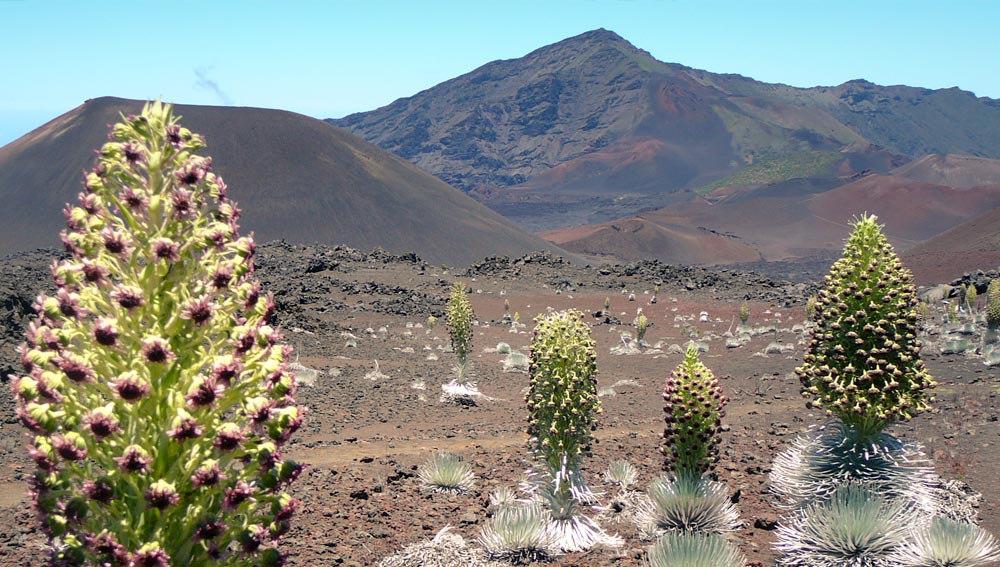
UNIQUE BIODIVERSITY
The stunning endemic (found only here) Haleakalā Silversword plant generally blooms in summer, infusing the summit of Haleakalā with a sweet and musky scent on calm afternoons. Once threatened by feral goats, this plant is now federally protected and recovering within the boundaries of the national park.
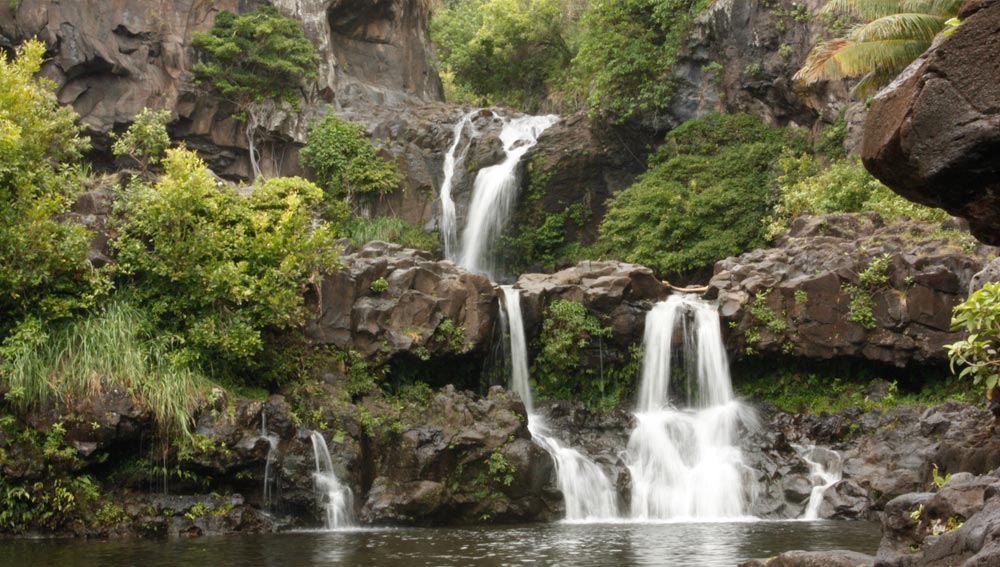
ŌHEʻO STREAM
Lush Kīpahulu valley cradles Ōheʻo Stream, which tumbles to the sea in a series of short runs and picturesque falls. Sudden downpours upstream and out of sight can cause raging flash floods, however, so always heed ranger warnings. Pīpīwai trail, which follows the stream uphill for two miles, begins here.

CULTURAL DEMONSTRATIONS
Visitors can take part in cultural demonstrations held at or near the visitor center, learning how to weave with traditional materials, make poi (a Polynesian staple food), create featherwork, throw fishing nets, or learn the basic steps of hula.

COASTAL WILDLIFE
The astute observer can spot frigatebirds, noddies, terns, and tropicbirds. Tiny fish called oʻopu inhabit the stream bottom and calm pools. Hawaiian green sea turtles, or honu, can be seen feeding on algae-covered rocks near shore.
Explore The Park Summit


House of the Rising Sun
The stunning sunrises and sunsets at the sacred summit of Haleakalā Volcano are justly famous. Sunrise reservations are required. Dress for inclement weather just in case, and check the park store for warm clothes and keepsakes. Stargazing is special here, too, and it is quiet like few places on earth.
Hiking Haleakalā Crater
Sliding Sands Trail begins at the summit parking lot and leads down into the immense multicolored erosional “crater” (actually, a long erosional depression) of the Wilderness Area. Nēnē, or Hawaiian geese, live in the grasslands here after a brush with extinction in the 1950s. Rustic cabins and campgrounds are available for overnight hikers with permits.
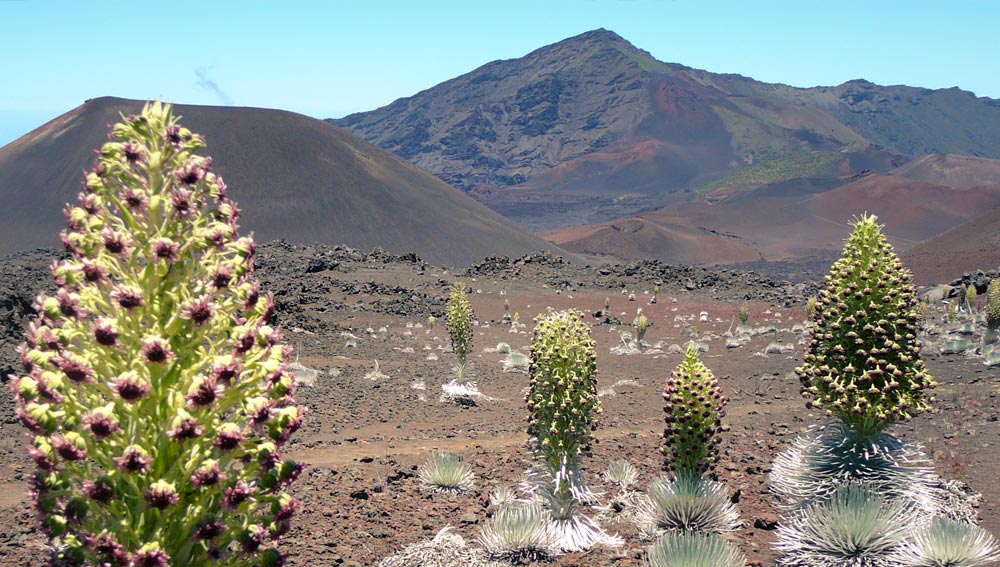
UNIQUE BIODIVERSITY
The stunning endemic (found only here) Haleakalā Silversword plant generally blooms in summer, infusing the summit of Haleakalā with a sweet and musky scent on calm afternoons. Once threatened by feral goats, this plant is now federally protected and recovering within the boundaries of the national park.

PARK LOCATION
Explore Kīpahulu District


Ōheʻo Stream
Lush Kīpahulu valley cradles Ōheʻo Stream, which tumbles to the sea in a series of short runs and picturesque falls. Sudden downpours upstream and out of sight can cause raging flash floods, however, so always heed ranger warnings. Pīpīwai trail, which follows the stream uphill for two miles, begins here.
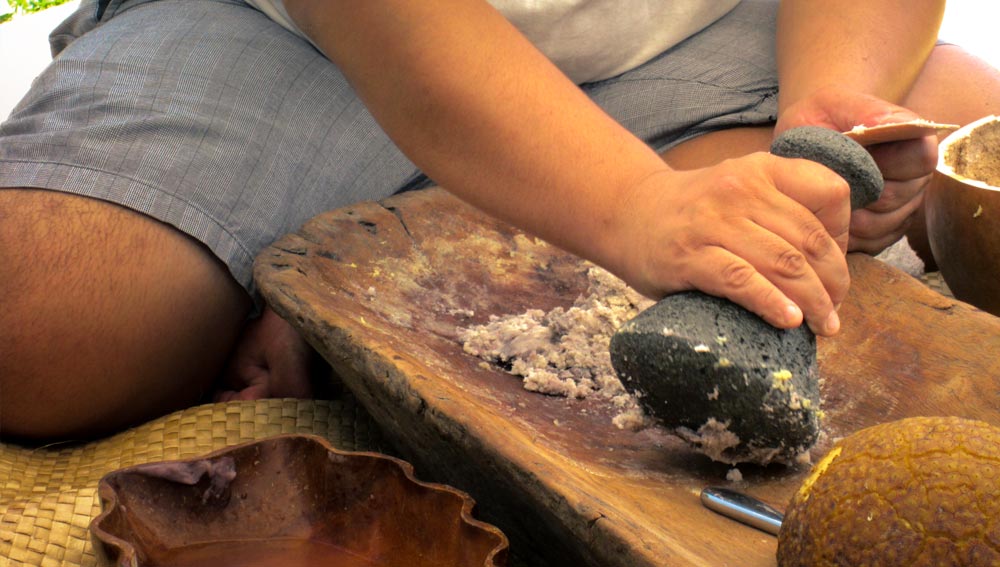
Cultural Demonstrations
Visitors can take part in cultural demonstrations held at or near the visitor center, learning how to weave with traditional materials, make poi (a Polynesian staple food), create featherwork, throw fishing nets, or learn the basic steps of hula.
Coastal Wildlife
The astute observer can spot frigatebirds, noddies, terns, and tropicbirds. Tiny fish called oʻopu inhabit the stream bottom and calm pools. Hawaiian green sea turtles, or honu, can be seen feeding on algae-covered rocks near shore.
Park Features
Hover to Discover
The Haleakalā Silversword descended from a plant in the sunflower family eons ago. The spiky silver ball blooms once in the plant’s lifetime.
There is no doubt that the stunning crimson ʻiʻiwi with its “creaky hinge” call is a “life list” bird for many.
Bright red ʻamaʻu fern fronds unfurl from this stunning native plant and gradually turn green as they mature.
To the surprise of many, the summit of Haleakalā volcano is an S-shaped erosional valley, not a round volcanic crater.
The endangered nēnē, or Hawaiian goose, was extinct on Maui at one time. But in the 1950s, nēnē were reintroduced to Haleakalā via Boy Scouts, who packed them into the backcountry in whiskey boxes.
A three-hour drive along the island’s north coast will bring you to lush and verdant Kīpahulu District.