Welcome to the second part of two installments! HPPA board member of long standing, Donna Barr, has a deep connection to American Sāmoa and Sāmoa, traveling back and forth and investing a good part of her life in that island nation. We benefit enormously from having her on our board for that and many other reasons. Donna is a writer, too, with a published book about her time in the Peace Corps in then-Western Sāmoa. Please enjoy this second part of a two-parter blog that Donna was kind enough to write for all of us.
*
Talofa! Last blog I wrote about O Le Pūpū Puʻe National Park in Sāmoa. In addition to the history and scenery described there, another opportunity awaits visitors – the Coastal Walk to the Sea which rewards with stunning views.
In the area of the national park, about 3000 years ago searing lava flows spread into a massive sheet, covering ancient forests, eventually reaching lowland areas, The molten stream filled in old lagoons and smothered the coral coast well beyond the present coastline to create the youngest land on Upolu Island. Across the Main South Coast Road from the park’s visitor center is the beginning of the 1.25 mile round-trip walk to the sea. There’s a dirt track to a small parking area, and then an obvious trail through the jungle. Within minutes you’ve reached the fifty-foot high cliff overlooking the ocean and the foamy spray below.
Even when not visible the ocean roars along the path through the native pandanus forest. Walkers soon come to new ocean views – magnificent arches and dramatic coastal scenery ending at a massive lava field with waves almost reaching the tops of the cliffs.
Despite conservation achievements like preservation of endemic forest habitat and designation of internationally significant native marshes within the park, challenges persist. Climate change poses a significant threat, contributing to rising sea levels and increased cyclone frequency. In 1991, Cyclone Val devastated the islands with 50-ft waves and 150 mph winds which destroyed the national park visitor center. Cyclones harm coral through wave action and debris and forests suffer not only due to lost trees, but in addition, aggressive non-native plants exploit the weakened forest ecosystem The park visitor center was rebuilt in 2007 while I lived in my Peace Corps village of Poutasi just down the road. JICA (Japanese International Cooperation Agency) volunteers (similar to Peace Corps) helped with funding and expert consultation. I was fortunate to become friends with Sayaka from JICA and we still keep in touch. You never know how national parks will bring people together from all over the world!
Sāmoa's Two Million Trees campaign (2015–2020) was a resounding success! The nation surpassed its initial goal, planting 2,215,756 native and fruit trees to restore forests damaged by climate change and the 2009 tsunami. Now they are moving onward to Three Million Trees! In Sāmoa, as in all of Polynesia, land, culture, and nature remain deeply connected. Traditionally, the area served as a source of food and medicine for nearby villages and the caves within the park were used for shelter and cultural practices.
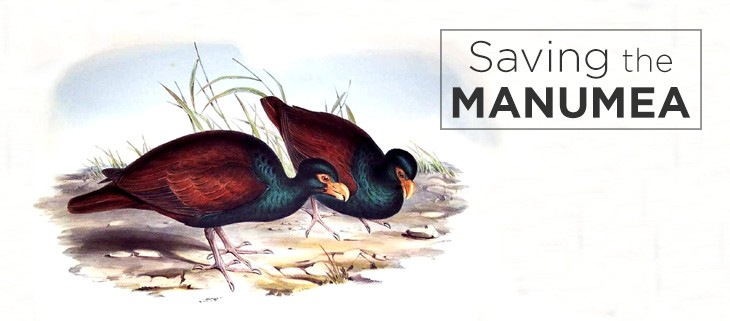
Conservation efforts have also yielded significant successes in native species protection, providing habitat for four of eight threatened bird species, including the Manumea, the critically endangered tooth-billed pigeon, Sāmoa’s national bird. Found nowhere else in the world, the Manumea is a species of ground pigeon with a large head and hooked beak. One of the closest living relatives of the extinct dodo, the scientific name for the species (Didunculus strigirostris) means little dodo.
A reflection from James Atherton of the Sāmoa Conservation Society sums it up well:
"O le Pūpū Pu'e is a unique National Park because it demonstrates a ridge to reef approach before that term was even invented. The park protects forests from the highest point on the island, right down to the shore and in doing so preserves good examples of most of Upolu's vegetation types from cloud forest, montane marsh, montane forest, lowland forest and down to coastal and littoral forest. Included in the park are volcanic craters and crater lakes, deep river valleys and many streams and waterfalls as well as lava tubes, coastal cliffs, offshore stacks and fringing coral reefs. Preserving a range of landform, ecosystem and vegetation types is important because not only does it protect habitats for many native and threatened species, but also allows for species movements between forest blocks, especially the fruit eating bats, pigeons and fruit doves that require large forest blocks to survive. For the above reasons, the conservation and protection of the OLPP NP remains a national conservation priority for Sāmoa."
*
Photos courtesy public archives.
To read more:
https://Sāmoaconservationsociety.com/
https://pipap.sprep.org/content/o-le-pupu-pue-national-park-ramsar-site-management-plan-2020-2030
https://en.wikipedia.org/wiki/O_Le_Pupu-Pu%CA%BFe_National_Park