Have you joined our Haleakalā Silversword Watch on social media?
Keith, on our Haleakalā National Park visitor center park stores team there on Maui, chooses one Haleakalā silversword plant a summer near the dry, cindery summit of the volcano to document weekly as it finally decides to send up a massive flower stalk, unfurl it, bloom like crazy, and then die back with its one mission completed: spread those tiny seeds on the wind to ensure the next generation.
What, though, IS a Haleakalā silversword plant?
Long before humans found the Hawaiian archipelago, seeds from the sunflower family arrived via the wind or the wings (or poop) of birds, and found a place to grow, hopefully. Sun struck, wind scoured, the seed survived and reproduced. Over generations beyond counting, the plant changed, evolving in response to the stresses and benefits of its new home. Slowly, patiently, it became the plant that now draws hundreds, if not thousands, of viewers a year to the national park. Visit the park, climbing the winding road to far above the tree line, and you can meet one.
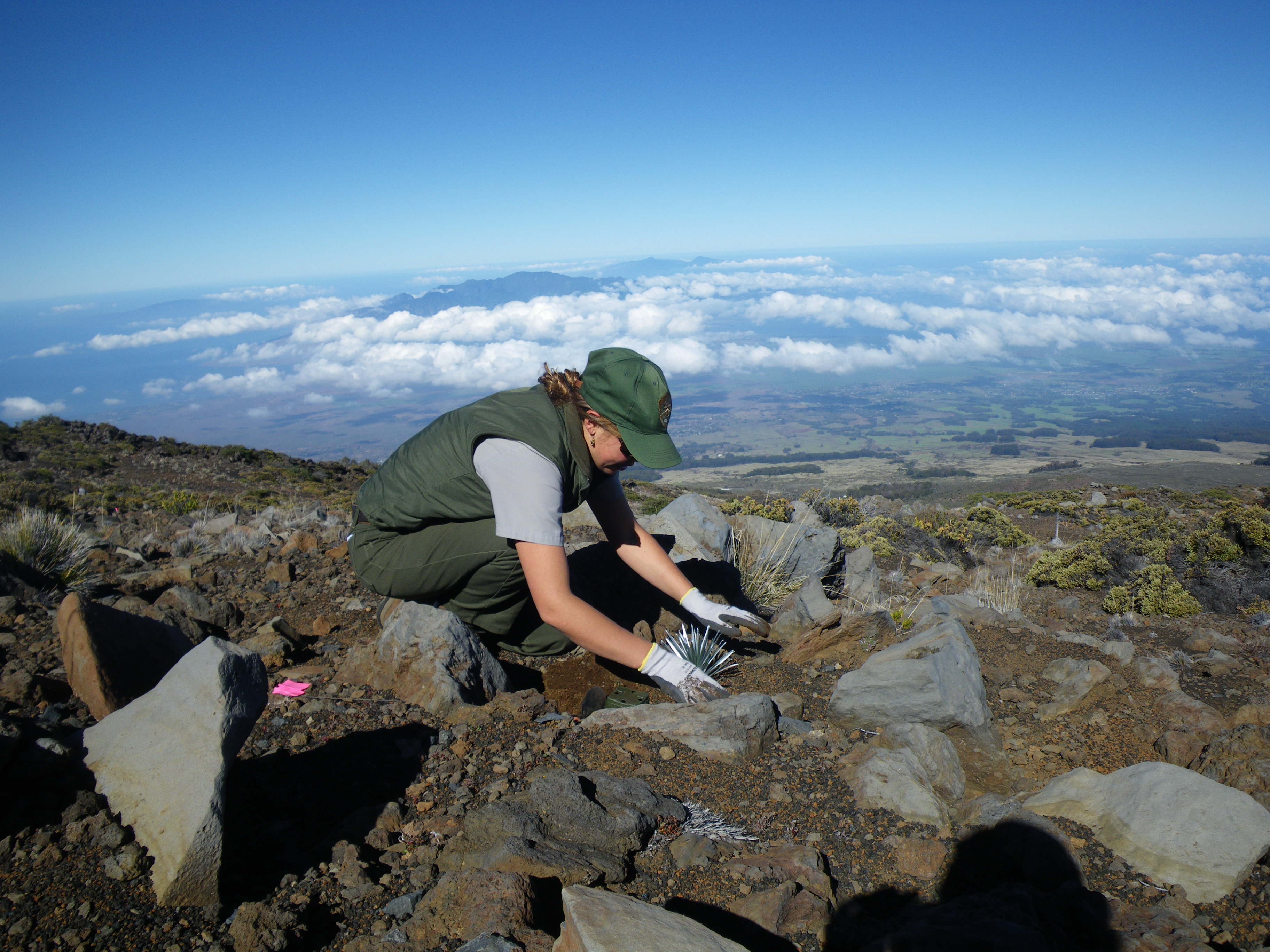
Around the visitor centers and down along the backcountry wilderness trails, look for a low, rounded cluster of vertical silver blades, each one softly furred to catch the unpredictable passing mist and aim it downward toward the roots. The plant grows in the loose cinder and stone cracks, its roots spread thin and vulnerable just beneath the surface (so it's important not to stand too close to them). Those fuzzy, spiky blades reflect the relentless, high-altitude sun instead of taking too much of it in. The silversword rosette waits. And it keeps waiting years, sometimes decades, holding its shape and growing slowly in the alternating patterns of heat, cold, drought, sleet, and wind.
Then one summer, it decides that the time is right to bloom. This is the silversword’s one flowering, its single chance to set seed. Once the process begins, the plant is not shy about how it goes about it. This may happen in 5 years, or it may happen in 50. But it will only happen, for that plant, once. From the center of the silver rosette of spiky leaves, a single stalk lifts skyward and unspools, growing day by day until it stands taller, sometimes, than 6 or 7 feet. Hundreds of pale purple blossoms open in slow succession from bottom to top, carrying a faint scent that drifts on the wind and reminds some of honey. Native and non-native bees, flies, and other insects readily come to this rare source of nectar so high on the otherwise fairly bare upper slopes of the volcano. The silversword will stand, blooming, until it has given all of its energy. Its flowers, leaves, and stem will slowly dry, its tiny seeds scattering lightly across the volcanic slope, catching where they can against rocks and in small pockets of cinder, waiting for enough moisture, nutrition, luck, to begin again.
Silverswords also established on Hawaiʻi Island and found their own ways of evolving slightly different forms in response to different high slope habitats. On Maui's Haleakalā Volcano, they are full-bodied and dense with blooms, while on Hawaiʻi Island’s Maunakea and Mauna Loa volcanoes they grow taller, more sparsely leaved and flowered. All of them persevere in the same demanding conditions of high altitude fierce sun, little predictable water, and nights that can be bitterly cold.
When people arrived in the islands over the last 1200 or so years, they brought hoofed animals like goats, pigs, and cattle. Goats in particular quickly moved into the high elevations where silverswords grow. The plant, with no history of such grazing and trampling pressure, could not withstand this. Numbers crashed. For a time after Western contact, people also uprooted and carried plants away as souveniers or curiosities, not knowing how rare they were becoming.
Protection, when it came, was deliberate, sustained, and hard won.
At Haleakalā National Park, established in 1916, fencing now encloses the entire summit landscape, keeping hoofed and grazing animals out. This fence needs constant vigilance and maintenance. Park staff and volunteers clear invasive plants from areas preferred by silverswords and watch over each fragile seedling. Seeds are gathered and seedlings grown in park greenhouses, held in trust against an uncertain future shaped by changing climate and shifting ecological conditions. By the early 1990s, on Hawaiʻi Island within Hawaiʻi Volcanoes National Park (also established in 1916), only a few Mauna Loa silversword plants remained. Careful work by park staff pollinating, collecting seed, growing and replanting, has returned them, slowly and steadily, to the the slopes of the volcano where they are watched under the diligent, hopeful eyes of park botanists.
The silversword does not hurry. It does not repeat itself. It asks only for time, space, and the right conditions to complete its long arc of becoming. At Haleakalā National Park, if you are near the summit visitor center and park store, or in the backcountry wilderness, when one finally blooms, you will understand that this is not just a plant, but a life shaped exactly to its home: resilient, fragrant, and singular.
Join this year’s Haleakalā Silversword Watch with Keith on social media here, here, and here.
Read about Haleakalā silverswords here.
Read about Mauna Loa silverswords here.
Shop silversword goodies here and support park programs with your purchases.